Stargazing
Four Reverbs and ambient sound generator in one
The space after
the sound.
Drop a note in and watch it build. Dense early reflection that slowly releases into drift. Warm diffusion that accumulates without getting harsh. Wide shimmer that breathes. A tail that simply never ends.
Noise generation, granular clouds, sidechain ducking, pulse gating - woven through every mode. Built for pads. Built for texture. Built for the sound after the sound ends.
VST3 · AU · CLAP · Mac · Windows · LinuxDeep
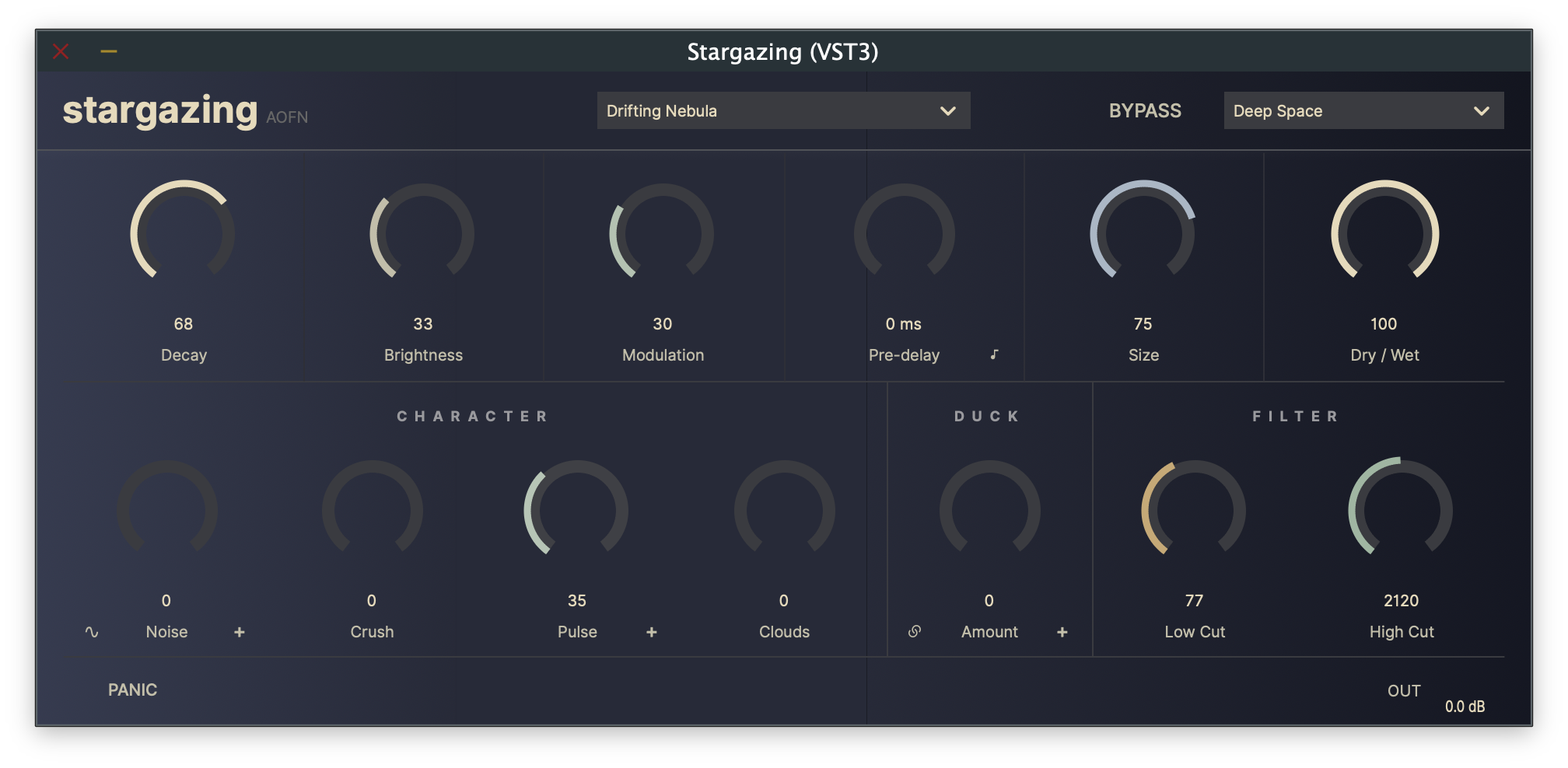
Space
Dense early reflections that thicken before releasing into a slow-drifting tail. The default patch is already a large space — not a room, a void with walls. Has a slight Lo-Fi Character with smaller Size and Decay values.
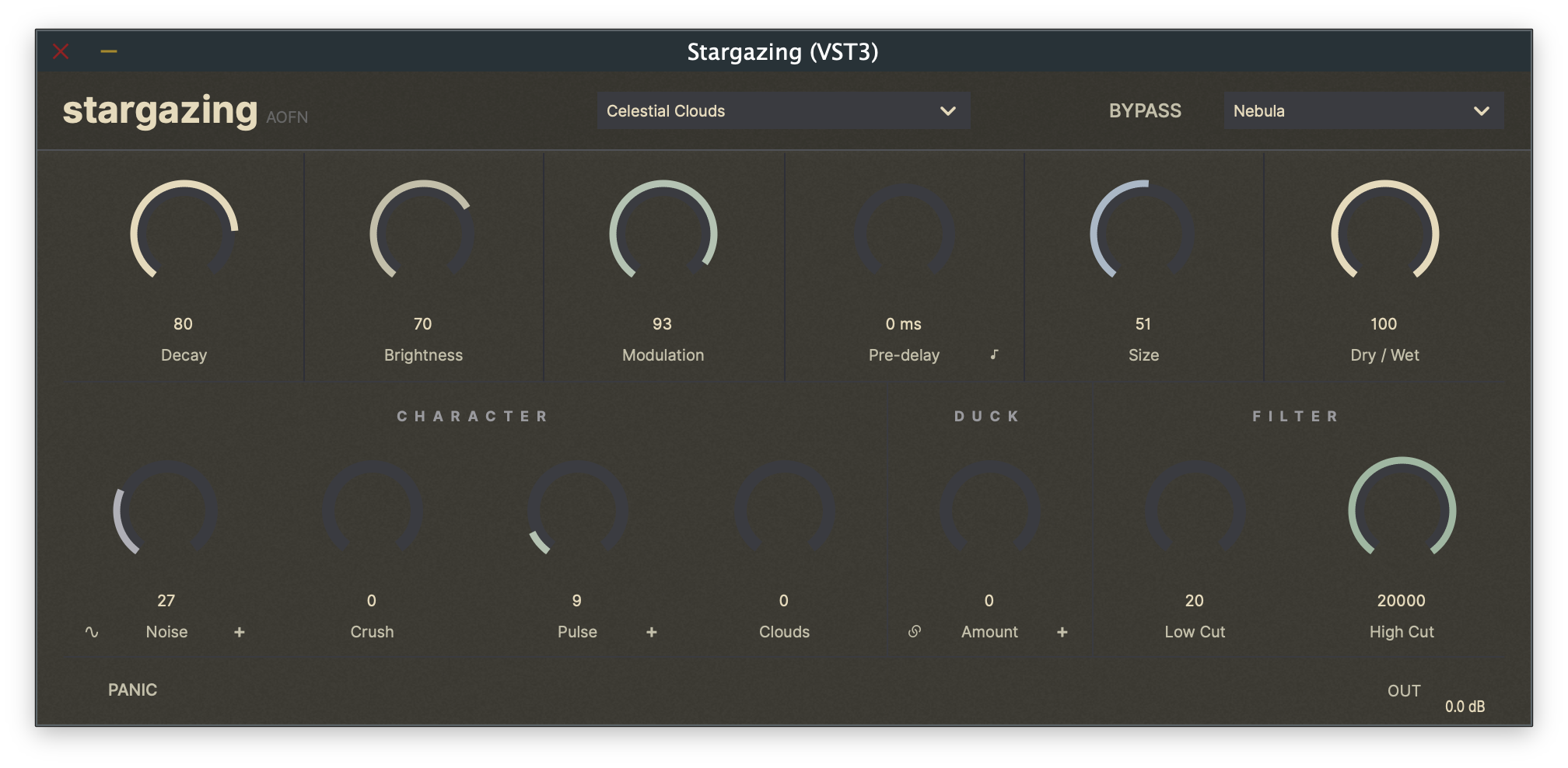
Nebula
Warm, unhurried decays that pile up without getting harsh. Size scales every internal delay line simultaneously. Modulation runs a chorus on the wet path after the reverb — movement that deepens the space rather than decorating it.
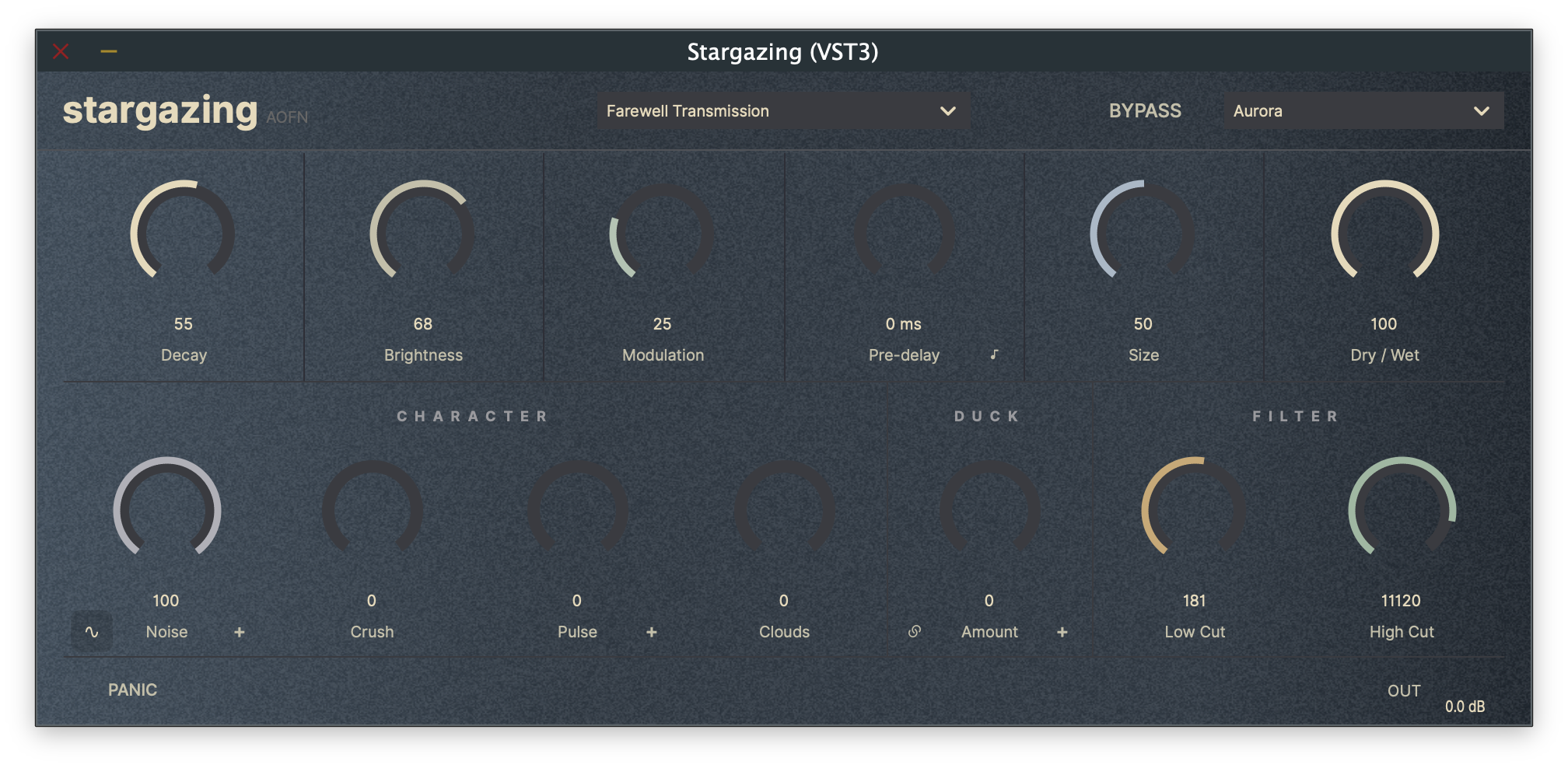
Aurora
Diffuse and wide without losing definition. Modulation runs inside the network rather than applied after — pitch movement stays organic. Sits well under vocals and strings without smearing.
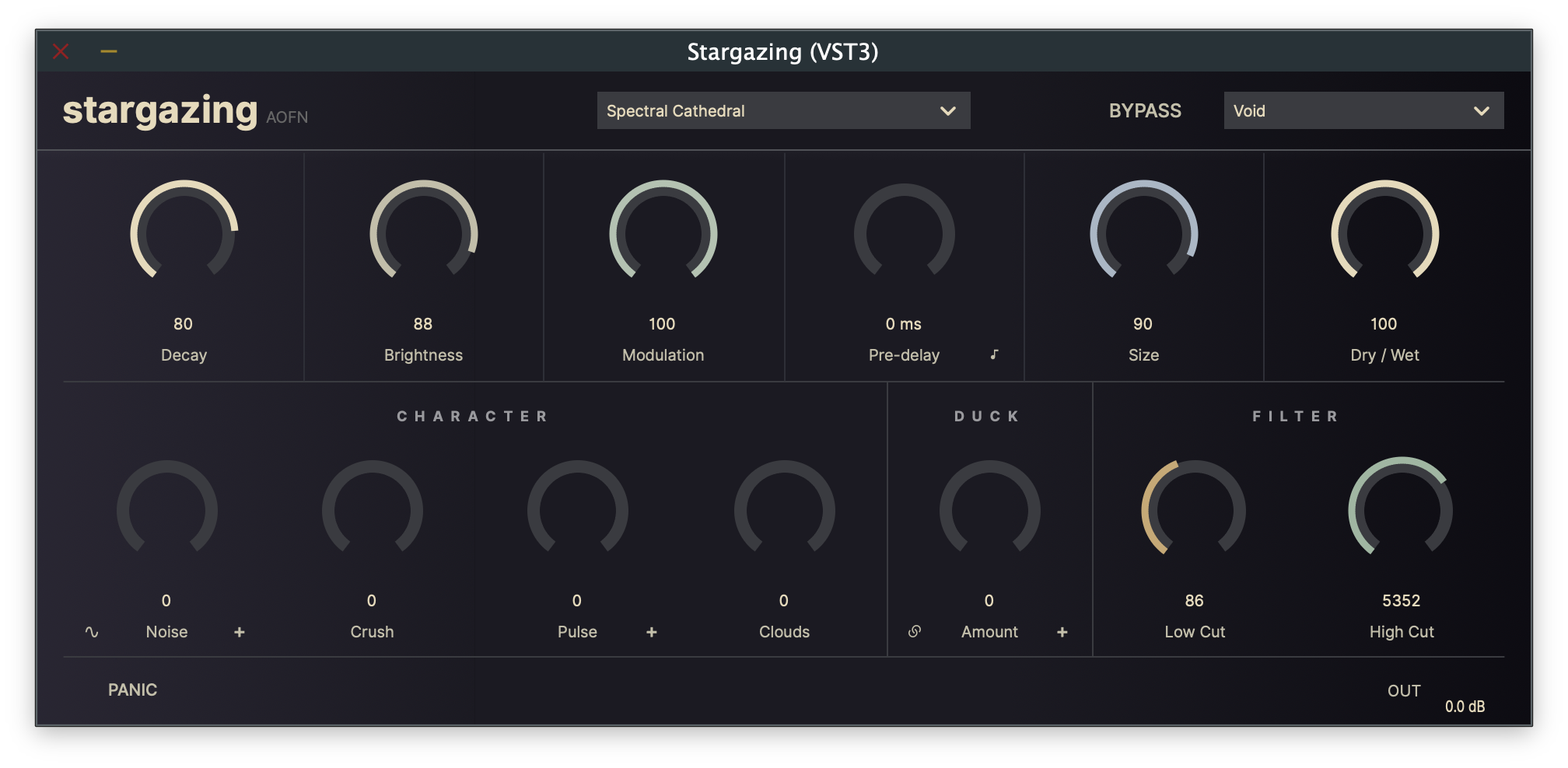
Void
At maximum Decay the tail doesn't fade — it sustains indefinitely. Brightness rolls off sharply, pulling everything toward dark resonance.
Extended Views
Noise, Pulse, and Duck each expand into a dedicated panel with larger controls, independent routing, and mode-specific options unavailable in the main view.
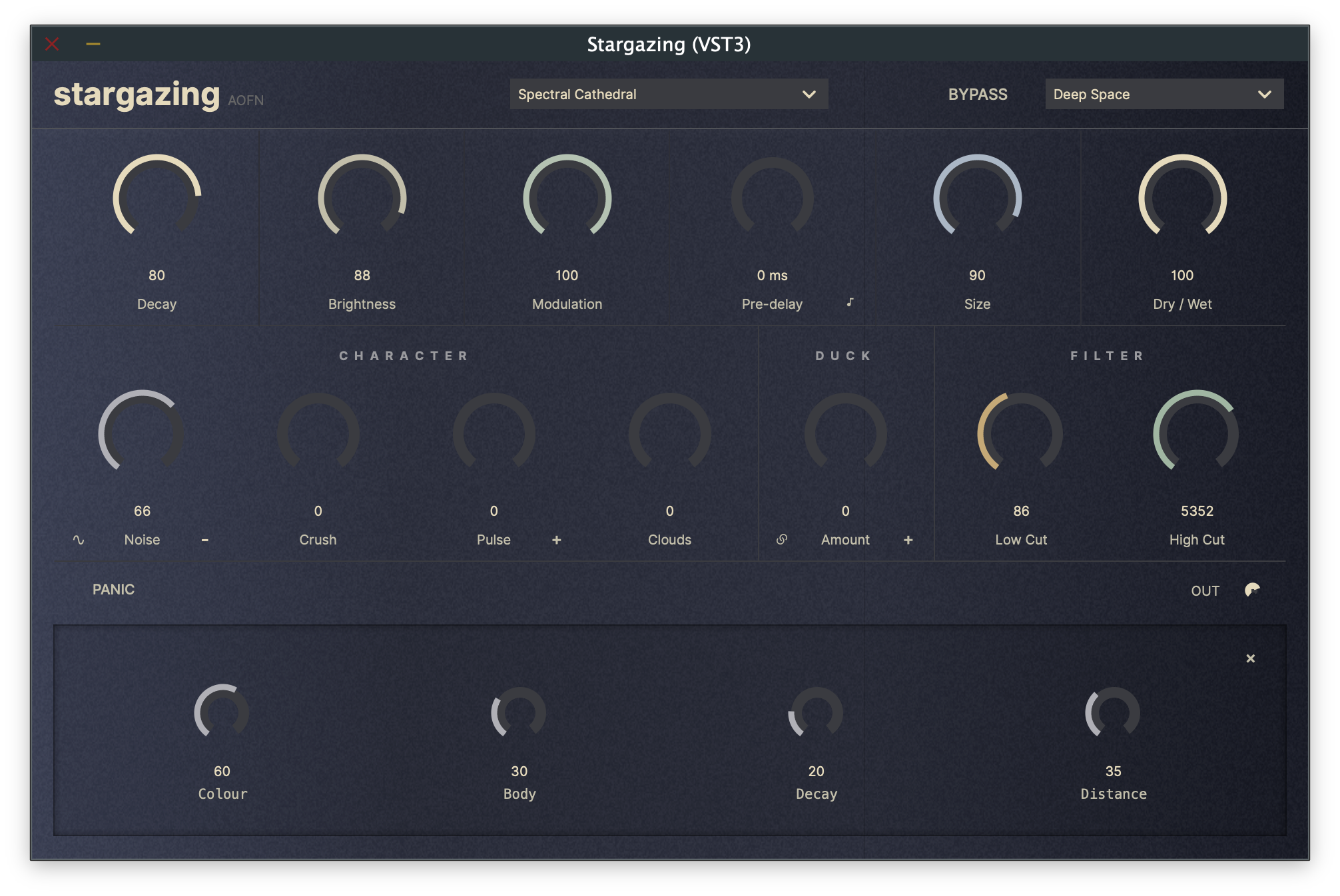
Modulated noise fed directly into the reverb input. Input-tracked keys the noise level to incoming audio; self-oscillating runs independently for continuous ambient texture. Tone and modulation rate adjustable.
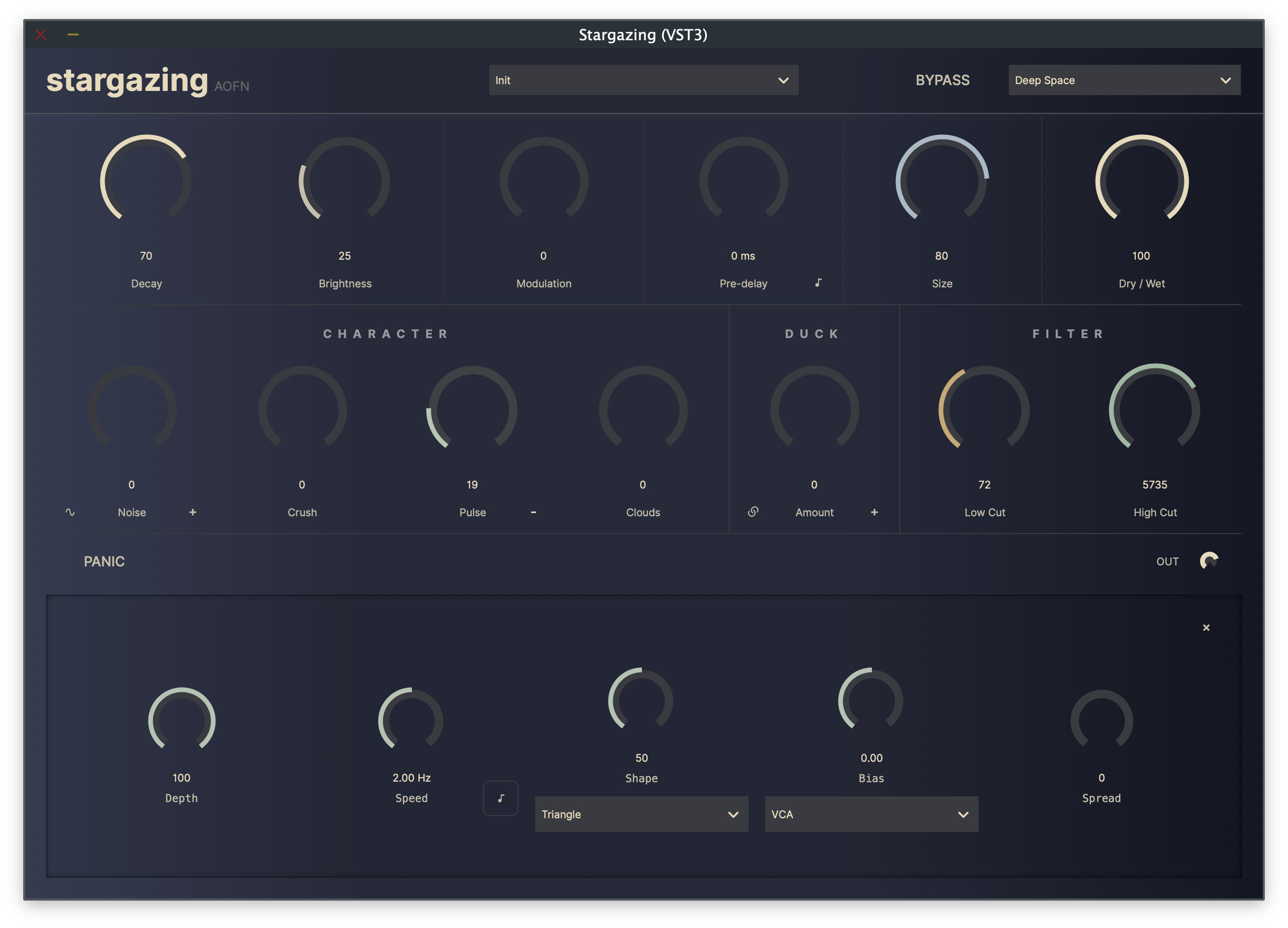
LFO on the wet path. VCA mode gates the level; VCF mode drives a filter sweep. Triangle, square, and saw waveshapes. Tempo-syncable. Based on the Gristleizer circuit from the free plugin Grizzly.
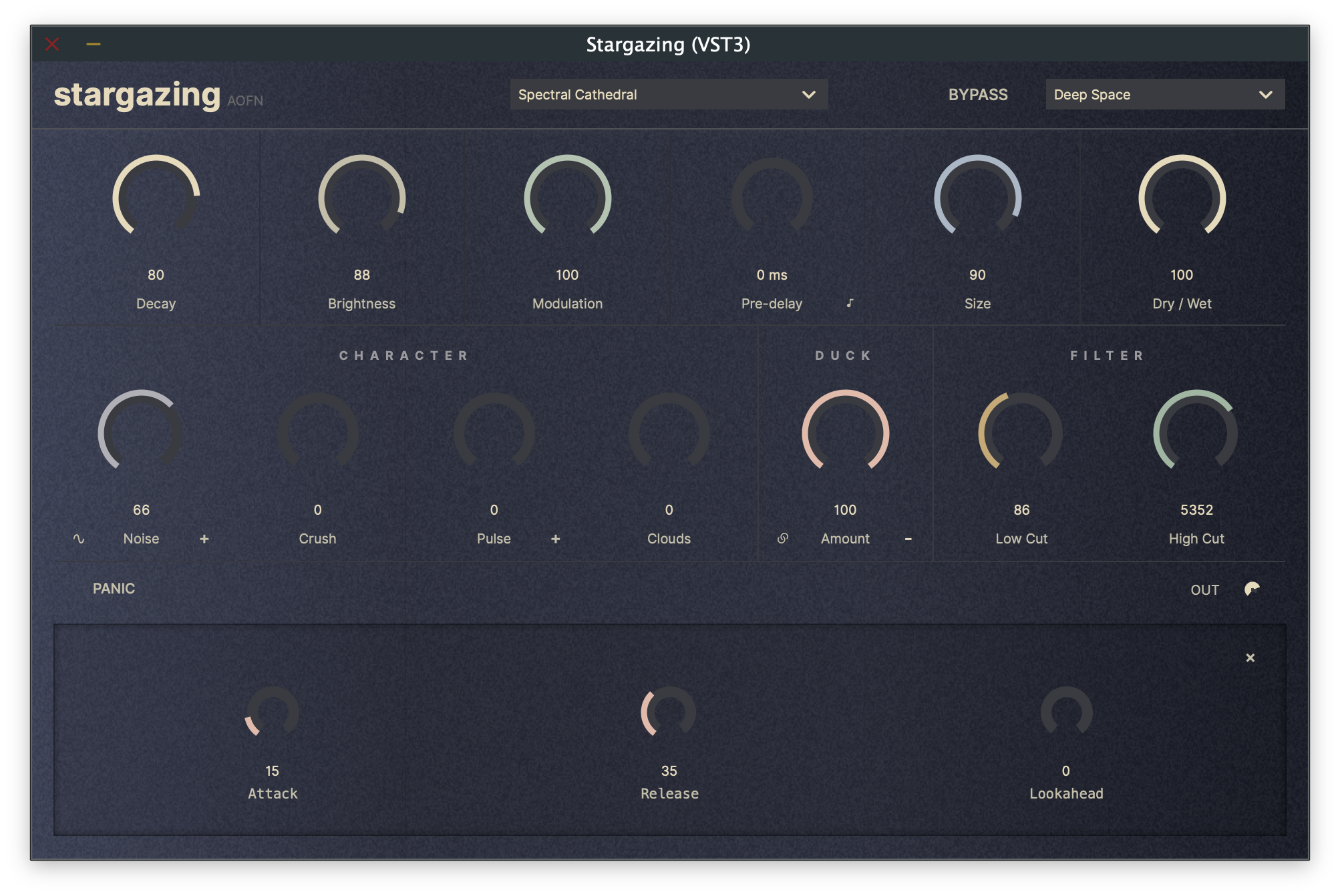
Gain reduction on the wet signal connected to the dry input or a separate sidechain input. The reverb tail pulls back when audio is present and returns as it decays. Clears transients without shortening the reverb.
Controls
- DecayTail length.
- BrightnessHigh-frequency content in the tail.
- ModulationChorus depth or internal LFO, mode dependant.
- Pre-delayUp to 2000 ms before the reverb input. Can be synced to DAW.
- SizeRoom scale. Multiplies the delay lines.
- Dry / WetEqual-power crossfade.
- Low CutHigh-pass on the wet path. 20 Hz – 2 kHz.
- High CutLow-pass on the wet path. 1 kHz – 20 kHz.
- CrushBit-crush and sample-rate reduction before the reverb. 0 is clean, 1 is six bits and heavy sample-hold.
- NoiseModulated noise into the reverb tail. Input-tracked or self-oscillating. ↗ Extended view
- CloudsMid-side saturation after the reverb. Can be subtle at low values.
- PulseLFO on the wet path. VCA or VCF mode. Triangle, square, saw. Tempo sync available. ↗ Extended view
- DuckGain reduction on the wet signal keyed to the dry input. Tail pulls back when signal is present and returns as it decays. ↗ Extended view
- Output Gain-36 dB to +12 dB trim after all processing.
- A/BTwo independent parameter slots. Click A or B to switch. Arrow copies the active slot to the inactive one.
Stargazing